
From satellite solar panels to advanced spacecraft panel integration applications, we engineer lightweight, high-efficiency solar panels built for demanding LEO and SSO environments. Our panel designs are engineered to deliver reliable energy production under extreme thermal cycles, vibration, and radiation exposure.
Where Grid Power
Is Not an Option
Spacecraft require consistent, reliable power to support communications, sensing, propulsion, and onboard operations throughout the entire lifecycle of the mission.
Space environments introduce extreme thermo-mechanical stress. Thermal cycling, launch vibration, and radiation exposure create failure modes that conventional panel architectures are not designed to properly manage.
At Merlin Solar, our space solar panels are built for the realities of space, not ideal conditions. By managing extreme thermo-mechanical stresses through our patented grid design, Merlin panels deliver long-term reliability without compromising power production.
- You’re designing satellite solar panels for LEO, or SSO environments
- You require high power-to-weight solar panel solutions
- You’re optimizing panel integration into spacecraft array architectures
- You’re developing next-generation concepts like space-based energy systems, power beaming, or orbital infrastructure
- You’re exploring space-based data centers or high-demand energy systems in orbit
- You need lightweight form factor flexibility including cover glass or flexible designs
- You’re pushing the next generation of space solar performance and are looking for the right partner to help get you there
What It’s Like to Work With Merlin Solar
Engineered to Solve the Hard Problems
Space systems demand engineering precision and long-term reliability under extreme conditions. That’s why our engineering team works side by side with you, where we challenge assumptions, solve constraints, and build panel solutions engineered for real mission conditions and long-duration reliability.

We Start With the Mission
Before we talk technology, we start with the mission. Orbit, thermo-mechanical requirements, radiation exposure profile, launch stress considerations, and system demands. For us, every single detail matters. We design your spacecraft power system around real conditions, so that optimal performance is built in from the very beginning.
We Engineer Beyond the Panel Surface
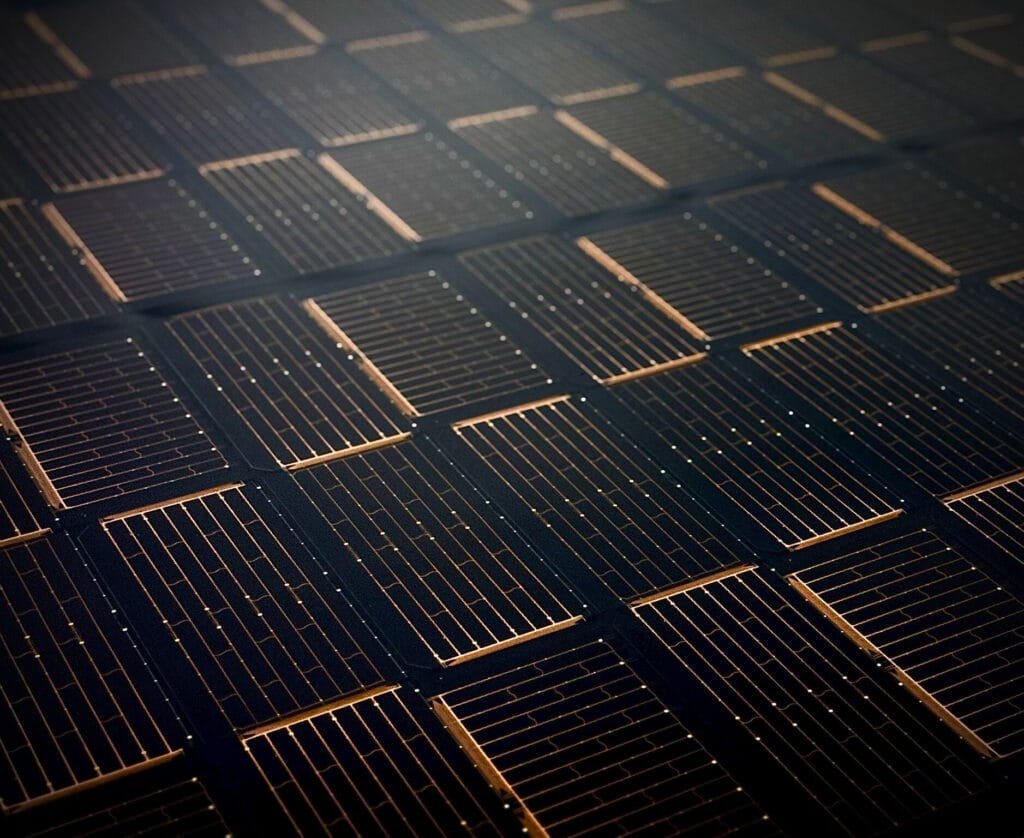
At Merlin, panel architecture is designed around the environmental realities of space, like thermal cycling, launch vibration, and radiation exposure. Our patented grid design helps manage thermo-mechanical stress while supporting thin silicon structures that reduce radiation interaction and improve long-term reliability. Every Merlin panel is built with these realities in mind, so performance holds up from deployment through mission life.

We Design for Real Conditions
Space systems need to operate under continuous thermal cycling, radiation exposure, and mechanical stress. Our radiation tolerant photovoltaics and high efficiency space solar cells are specifically engineered to perform through temperature extremes and long mission lifecycles, because ideal conditions don’t exist out there.
We’re There When You Need Us
We don’t hand off a design and then disappear. From the initial concept to deployment, we stay close, working alongside your team to ensure everything integrates, performs, and holds up when it matters most.

When the problem is this complex, you need a team that’s willing to think differently, and build what others won’t.
Let Us Bring Your Trucking
Fleet Charging System to Life
01
Understand Your Fleet
We start by getting a clear picture of how your fleet operates, like your vehicle types, daily routes, and where your power challenges show up. From solar panels on trucks to a solar panel for semi truck roof applications, we look at how truck solar panels can become your fleet charging solution, fit into your setup and improve how your vehicles run every day.
02
Design the Right System
Next, we work with you to design a charging system that fits your needs. Whether you’re looking at battery maintenance, reefer support, or integrating a truck or semi truck power inverter, we help plan the right setup. That can include everything from a pure sine wave inverter for truck applications to a 5000 watt power inverter for truck or even a full 5000 watt inverter for semi truck system.
03
Deliver & Support
Once everything is in place, we stay involved to make sure it all works the way it should in real conditions. From installation through rollout, we support your team every step of the way so that your system performs as it should, and your fleet stays powered and ready.
Why Space Programs Choose Merlin Rugged
Solar Technology for Real-World Conditions
01
Delivers Power In the Harshest Conditions of Space
Our panel architecture is engineered to maintain performance under repeated thermal cycling and radiation exposure. We ensure that your system maintains stable energy production across long mission durations and demanding orbital environments.
02
Performs In Extreme Thermal Cycles
Repeated thermal cycling creates significant thermo-mechanical stress across spacecraft structures and power systems. Merlin panel architectures are engineered to maintain reliability and energy production through these long-duration environmental cycles.
03
More Power, Less Mass
Every kilogram matters. Our high power density solar panels are designed with strong weight-to-watt solar panels space performance, giving you more stowability, form factor flexibility, and more output without adding any unnecessary weight, because in space, efficiency is measured in both watts and mass.
04
Built to Deploy and Adapt
We work with customers to engineer solar panel configurations that efficiently integrate into deployable spacecraft architectures.
05
Engineered for Long Missions
Space missions aren’t short-term, and your power system shouldn’t be either. With strong end-of-life degradation stability, our systems are built to maintain output over time, even under radiation exposure and prolonged operation.

In this industry, having the right partner makes all the difference.
In Space, Reliability is Essential For The Entire Mission Lifecycle
The biggest thing that most teams first consider is if a system will actually hold up in space. Between thermo-mechanical degradation, solder fatigue, radiation degradation, extreme launch vibration, and long mission durations, there’s a real concern about performance. When your space solar panels underperform (whether that’s due to poor angle capture, radiation degradation, or temperature extremes) the entire spacecraft power system is put at risk.
Thermal cycling, launch vibration, and radiation exposure all contribute to long-term degradation mechanisms that impact panel reliability and energy production over time. Without strong thermo-mechanical stability and end-of-life performance, even high-efficiency solar panels can quickly degrade under real orbital conditions.
The Cost of Getting Space Solar Power Wrong
Power Loss
Reduced solar panel efficiency limits the capability of your systems, impacting your communications, data collection, and overall mission performance when it matters the most.
Degradation Over Time
Repeated thermal cycling, launch vibration, and radiation exposure create cumulative thermo-mechanical stress that can impact long-term panel reliability and energy production. Without durable, radiation tolerant photovoltaics, long-term reliability becomes highly unpredictable.
Weight vs. Output Tradeoffs
A poor power to weight ratio solar system limits the flexibility in your design. Mass allocation directly impacts mission flexibility and the efficiency of your payload.
At Merlin Solar, we design space solar panels that perform in the real conditions of space (not the ideal ones) so your system can deliver consistent power from launch through to mission end.
Are You Ready to Build a System That Performs When It Counts?
Our Process From Concept to Orbit
This definitely isn’t a plug-and-play process. Every mission brings along with it new variables, unique constraints across mass, thermal cycling, radiation exposure, and integration requirements. That’s why our engineering team works side by side with yours, working through mission constraints, environmental conditions, and integration requirements to ensure reliable on-orbit performance.

Step 1: Understand the Mission
We start by exploring all of the details, such as orbit, exposure, power demand, and thermal conditions, ensuring nothing gets overlooked. Whether you’re working with LEO satellite solar panels or a SSO satellite solar array, we evaluate expected on-orbit performance under real environmental conditions.
Step 2: Engineer the Right Solution Together
This is where the system takes shape. We work alongside your team to explore configurations, analyze tradeoffs, and design a solution that fits your mission. From early concepts through testing, we stay involved. Whether we’re running tests together or helping break down the results, we make sure that every step leads to a system that performs the way it should in orbit.


Step 3: Test, Refine, & Deliver
Before anything is finalized, we work closely with your team to validate the system through testing, iteration, and real-world evaluation. This is a collaborative process, where insights from testing help guide any refinements and ensure the system performs the way it needs to. From integration through on-orbit performance, we stay involved to support, adapt, and help you get the most out of the system over the life of the mission.
Do You Have Questions About Your Space Solar System Requirements?
The Right Solar Partner Makes All the Difference
The space industry operates with a high level of confidentiality, and at Merlin, we take that very seriously. While we collaborate closely with our partners throughout the entire design, testing, and deployment process, we also recognize the importance of protecting proprietary systems and relationships. Out of professional integrity, we are intentional about protecting that work, keeping partnerships, systems, and details private.
Merlin Solar
Is Your Power System Ready for What’s Out There?
Space missions introduce complex constraints across mass, thermal cycling, vibration, radiation exposure, and long-duration reliability.
Merlin Solar engineers panel solutions designed to perform under these unique operational conditions If you’re building something that has to perform out there, we’re here to help you power it.
Frequently Asked Questions
Space solar panels are advanced photovoltaic systems that are built to generate power in the most unforgiving environments. Designed for satellites and spacecraft, these space solar panels are engineered to perform in extreme temperatures, radiation, and constantly changing light conditions.
Satellite solar panels are the lifeline of any satellite. They provide continuous solar power for satellites, powering communications, navigation systems, sensors, and all onboard operations that keep missions running.
Merlin Solar focuses on engineering lightweight, high-efficiency solar panels that integrate into customer-designed deployable array architectures.
In space, every gram counts. A strong power to weight ratio solar system delivers more energy with less mass, helping reduce launch costs while giving engineers more flexibility in system design.
End-of-life performance refers to how well a solar panel keeps up its energy production after prolonged exposure to thermal cycling, launch vibration, radiation, and long-duration orbital operation.
Not by our definition. Merlin Solar focuses on high-performance solar panel solutions designed to integrate into broader spacecraft power architectures. These systems usually don’t include onboard energy storage, controllers, or spacecraft power management electronics.
